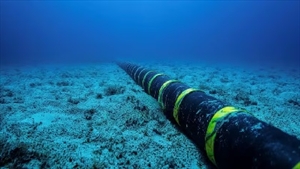
The IAB moves forward with recommendations
At the end of 2024, the International Telecommunication Union (ITU) created a specialized body to develop recommendations and strengthen submarine cable resilience: the International Advisory Body for Submarine Cable Research Alliance (IAB), Andrés Fígoli Pacheco, an ITU Project Manager, recalled during his presentation at the Carriers Map Day 2026.
The body was created in response to a major incident in March 2023, when a submarine landslide severed six submarine cables off the coasts of Côte d’Ivoire and Nigeria. Repair vessels arrived with a three-weeks delay.
The IAB is co-chaired by Nigeria’s Minister of Telecommunications and the head of Portugal’s telecommunications regulator, Anacom. It also includes 42 CEOs of companies that deploy cables, as well as engineers from Meta.
Fígoli highlighted one key point: the International Advisory Body brings together US and Chinese officials, along with representatives from all other countries, who work in an environment of constructive dialogue. The key to this harmony — which ultimately translated into consensus on the recommendations — is that the body’s work focused on resilience rather than security.
Following two summits (Abuja in 2025 and Porto in 2026) three working groups were established with specific mandates. One addressed delays in permits for both cable maintenance and deployment. Another focused on ways to minimize the risks of cable cuts. The third sought to promote connectivity.
The work of the three groups resulted in 39 recommendations. A report of more than 200 pages was published on July 10, detailing best practices worldwide and noting that Latin America has regulations imposing penalties on those who damage submarine cables. Uruguay, for example, imposes fines of up to US$500,000 for such acts.
Regarding permit delays, one recommendation is to designate a single point of contact, or one-stop shop, in each country. This would be a specialized body capable of coordinating with other agencies without those agencies losing their respective powers.
The body also recommends conducting studies to improve the efficiency of base ports. Brazil was cited as a case in point: 15 submarine cables land there, but there are virtually no base ports.
The second working group made recommendations on preventive sanctions and increased coastal monitoring to prevent damage. The third group worked, among other issues, to restore insurance coverage for the subsea portion of submarine cables, which is currently limited to cable landing stations.
In his presentation, Fígoli noted that while the recommendations are universal, the solutions arising from them must take each country’s specific circumstances into account. He cited the difference between Uruguay and Argentina in penalties for cutting cables: fines are higher in Uruguay because the country has experienced serious cable-cutting incidents involving fishing vessels, something that is not common in Argentina.
Assessment. The global submarine cable ecosystem faces growing risks and longer repair times:
• Cables remain highly exposed to fishing activity, vessel anchoring and natural hazards.
• The average response time for repairs more than doubled between 2012 and 2024, rising from less than 20 days to more than 50.
• The concentration of routes through a handful of maritime chokepoints creates systemic vulnerabilities.
Vulnerable regions and a complex ecosystem
• Small island developing states (SIDS), least developed countries (LDCs) and other underserved regions continue to depend heavily on a limited number of cable systems.
• Changes in weather patterns and environmental pressures are emerging as risk factors for cable landing infrastructure and seabed stability.
• Resilience depends on coordinated action across a complex ecosystem of stakeholders, including governments, regulators, operators, financiers and international organizations.